Friday, 22 December 2017

Testing for carbohydrate and fat in food

Even more experiments from Elena's sexto class.  They have been testing different foods for carbohydrate (starch using iodine solution from the pharmacy) and fat (using medical alcohol).  These are the easiest food groups to test for and the students catagorised the different foods by what nutrients they contained.

 
Link to pdf: Nutrients in food teaching notes and worksheet

Measuring energy in food by Elena

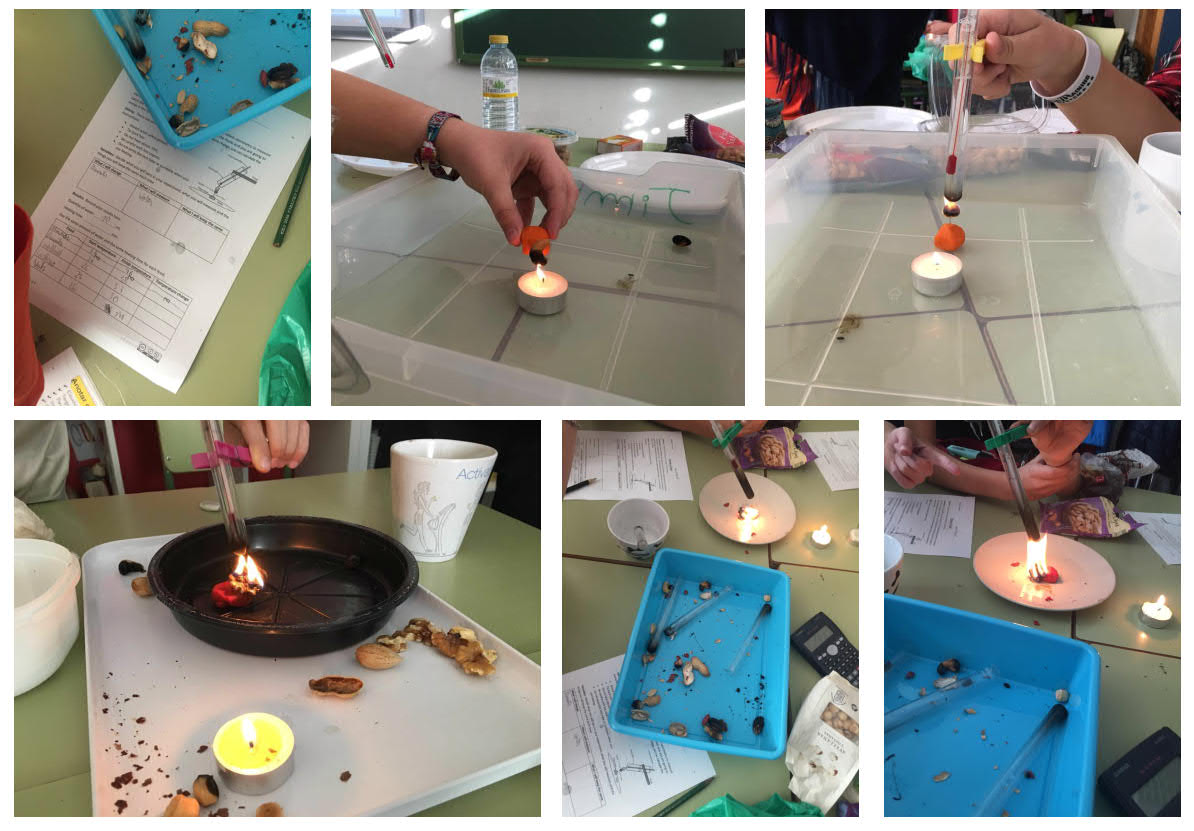
More cool experiments from Elena's sexto class.  They have been burning different types of nuts and measuring how much heat energy the fire makes.  They caught the energy in a test tube of water and measured the temperature increase - you can use this to calculate the energy in the food.  Fire, test tubes and burning food and you can sneak some maths in too. 


If you have a nut alergy problem in the class you can use things like pringles crisps, bread and biscuits but they are not as easy to burn as nuts are.

Link to pdf:  Energy in food teaching notes and worksheets

Simulating digestion by Elena

Elena has been doing nutrition and digestion with sexto.  They have been using ladies tights to simulate intestines and have investigated how food passes through the intestine walls.  They did peristalsis with their hands and looked at what foods were absorbed quickly, slowly and not at all.


It looks messy and fun!
Link to pdf:  Teaching notes and worksheet

Friday, 3 November 2017

Electricity workshop

We did an electricity workshop today to explore the fantastic electric circuit equipment in the school.  I put together 7 problems using bulbs, batteries, switches and buzzers to allow the participants to work out how to put together some basic circuits for particular applications.
We did:
Series circuits,
Parallel circuits,
Motors,
Master switches,
Alarm circuits
and a Morse code transmitter.

Then we looked at some measuring activities using a houshold multimeter.
We investigated:
Conductivity of liquids,
How number of batteries affects the current,
and How number of bulbs affects the current.

We also had a very little look at electromagnets!

Here are some photos:


And here are links to the experiments that we did today:

Link to a pdf version of the problems: Electricity problems

Link to the pdf version of the individual handouts: Handouts for solving the problems

It was really fun and I hope that I gave you some ideas about how to use these great resources.  Thanks for coming.

Jenny

Measuring reflexes with sexto (by Elena)


Elena tried out the reflexes activity with her sexto class.  It is a really simple way to get the students thinking about how different parts of our bodies communicate and why these communications are not instantanious.  All you need is 30 cm rulers.
Usually this activity involves a lot of cheating (especially from competitive boys), but it is fun and it does not really matter.  Get the students to think about doing a "fair test" and sources of error (lots!).  The main focus of the activity is on data collection using a tally chart to measure frequency.  They you can get them to plot a bar chart - if they do it properly you will get a bell curve, but they probably won't which is ok.
 
All data collection and graph drawing us useful to prepare them for secondary school.

Link to instructions and worksheet: Reflexes Activity

Making kefir yogurt

Teach kids about yeast and fermentation with food!!!!!!

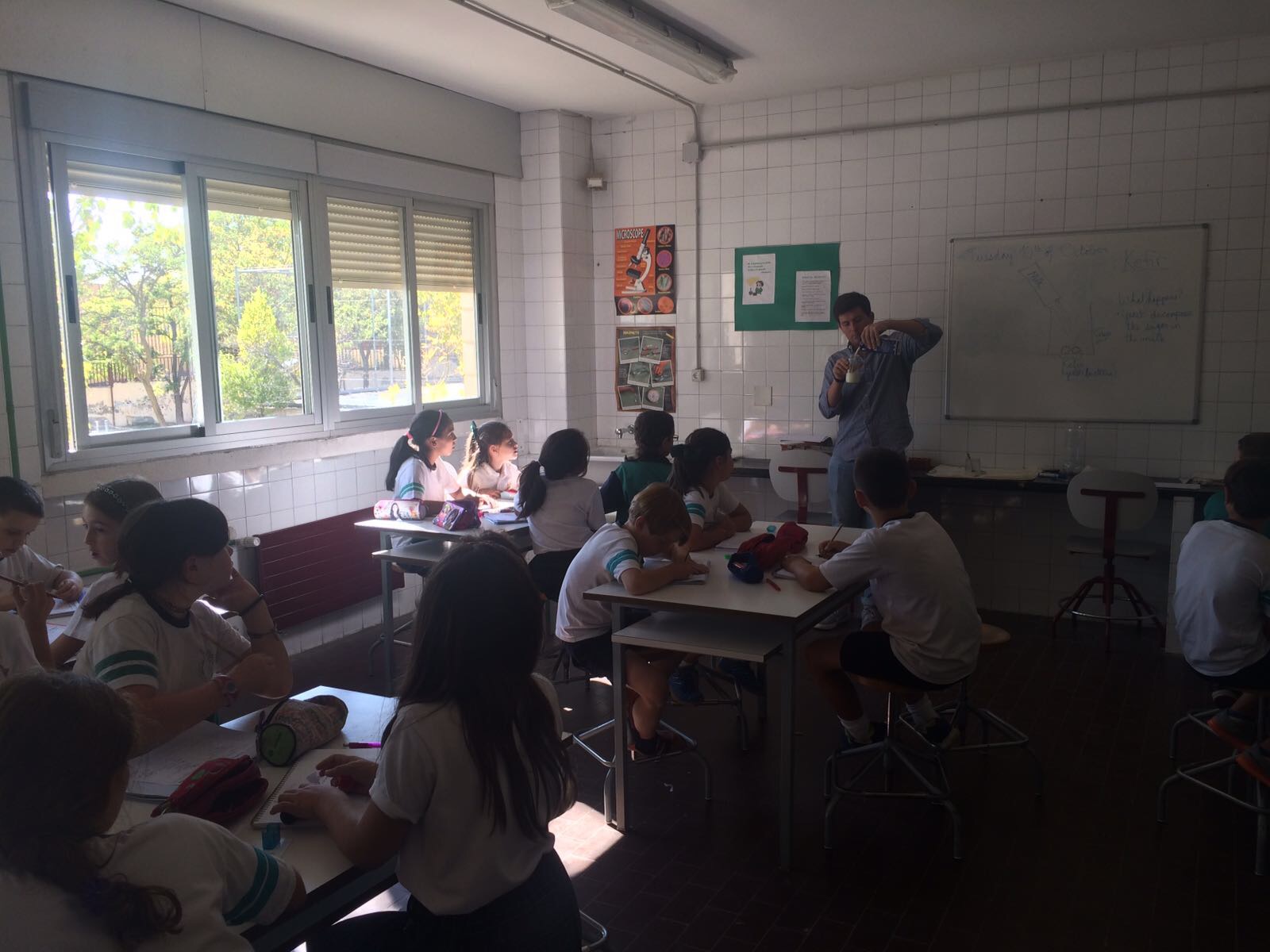
Kefir is an easier dairy fermentation science experiment to do. It is a traditional fermented food made from milk, full of beneficial probiotic bacteria and yeast. It's similar to yogurt.

Try more dairy fermentation science at home with a yogurt recipe:


Yogurt is also fermented milk, but is made differently. And, there are different types of yogurt, such as greek yogurt.

Here is an article that explains this more thoroughly:
http://www.culturesforhealth.com/learn/yogurt/how-to-make-homemade-yogurt/

Friday, 20 October 2017

Camera Obscura - Working Model Eye (Sexto) By Elena


Elena's students build working models of eyes (camera obscura) in class using shoe boxes and tracing paper. 
Then they went out on a sunny day and tested them on the patio.  The construction is relatively simple but what you see inside the box - the world projected upside-down is weird and fascinating.  You can tie this in to the nervous system and the brain because the information that the eye collects is upside-down and the brain corrects it for us.  We don't see the world upside-down, our brain is too clever and adaptable for that.  Safety warning - Don't look at the sun!
Link to pdf:  Instructions and Information for Camera Obscura Activity