- Things to think about how to make a Lego maze:
- How wide does the path need to be?
- Do you use any obstacles?
- Is there anything you can add to make the journey through the maze smoother?
- Is it easier with a smaller or bigger marble. Why?
- Can you make it bigger?


Sunday, 14 April 2019
More fun Lego ideas


Science experiments through LEGO engineering
Build a boat and a car powered by a balloon and experience law of motion. We can try with different boat/car shapes and designs and race to see which one works best. You could even try a race between your balloon-powered car and a chemical reaction car . Which is faster?


Wednesday, 10 April 2019
Water pH experiment
We have learnt how different types of water can have varying water pH.
We have used this activity to introduce to the pH scale.


We have used this activity to introduce to the pH scale.


Sunday, 7 April 2019


Wednesday, 23 January 2019
Some plants produce their own light
A plant was created by genetically modifying its structure to include luciferin, a chemical that gives jellyfish their radiant glow.
Today we have used a chemical reaction to make real flowers glow in the dark. Place a white flower into a glass for several hours to absorb the fluorescent highlighter ink.
When the flower has adsorbed the water, its petals will glow!
This experiment uses a "black light".
Black lights look purple, but it's the light they produce that you can't see that's really interesting. Black lights produce ultraviolet (UV) light. Our eyes can't perceive UV light, but our skin can feel it; UV light is the reason we get sunburns.
Some substances, like the ink in many highlighter pens, will glow under a UV light. The fluorescent ink absorbs the energy in the UV light, and then emits it as visible light.


Thursday, 17 January 2019
Why are leaves green?
Chlorophyll is the pigment in leaves. Chlorophyll works by absorbing sunlight and turning it in to energy for the plant.
We can better understand chlorophyll by extracting/removing it from leaves.
This will show us what the true colour of the leaf is, which they can also see in autumn just before the leaves fall off trees.


We can better understand chlorophyll by extracting/removing it from leaves.
This will show us what the true colour of the leaf is, which they can also see in autumn just before the leaves fall off trees.


Sunday, 23 December 2018
How animals survive the winter
We want to show how blubber keeps animals warm.
We fill a container with ice cubes and water then in a plastic bag some vegetable oil and cotton.
Finally we put both hands, one in the oil and one into the ice water.
They all agreed that one hand was freezing and their hand in the oil was warm.


Friday, 9 November 2018
Cool things to look at with a microscope
We did a workshop today about using simple microscopes to see a variety of biological, chemical and physical objects. Here is a link to the slides.
Link: Ideas Powerpoint Show
We looked at things like plant cells, pond creatures, crystals, material, micrometeorites and LCD screens.

We also looked at some ideas for experiments for younger children. I have posted the links to ppt documents in case you want to translate them into Spanish. They relate to the activities in the powerpoint show above.
Link:
Infantil/Primaro worksheets/fichas 1
Infantil/Primaro worksheets/fichas 2
Parachute men, cabbage jelly, flying seeds, sunlight energy, puddles, fast cars, floating boats, robotics and different materials. I hope these are useful!
Jenny
Hoy hicimos un
taller sobre el uso de los microscopios del cole para ver una variedad to coses
biológicas, químicas y físicas. Aquí es
un link para las diapositivas:
Link: Ideas Powerpoint Show
Miramos a los células
de una planta acuática, bichos del agua del Arroyo de Valdelatas, cristales de
sal, tela, micrometeoritos y como funcionen las pantallas LED.
Para los de
infantil y primero de primaria, incluye algunos experimentos con fichas. Arriba son las fichas en inglés en powerpoint
si quieres traducirles.
Son sobre:
Construir paracaídas
Gelatina que
cambiar color con pH
Semillas que vuelen
La energía del
sol
¿A dónde van los
charcos?
Rampas con
coches
¿Cuántos canicas
para hundir un barco?
Robótica súper
sencilla
Y Propiedades de materiales.
¡Espera que sean útiles!
Un saludo
Jenny
Saturday, 20 October 2018
Worksheets to challenge all levels
Hello All,
I've not forgotten about my Blog, I've just been very busy at work and I teacher older children. I have however continued writing and I have become a big fan of Level Assessed Tasks. Here is one for early secondary that I have written:
Link to pdf: Particles and phase changes
Here is another more sexto one: from TES:
https://www.tes.com/teaching-resource/new-ks3-assessment-task-plants-11314566
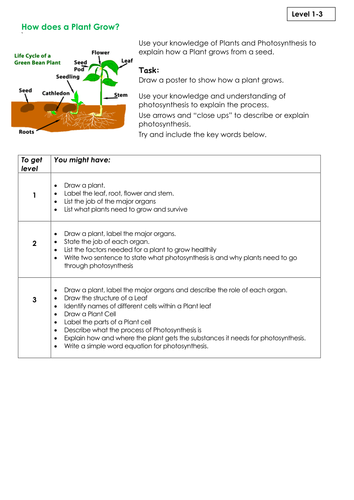
I think they are great because students can choose how much or how little they do and they are really easy to grade, just tick off the parts that they have done. If you have any requests, I am now very fast at writing these.
There are loads of this style of task worksheet available on the internet.
Tell me what you think.
Jenny
I've not forgotten about my Blog, I've just been very busy at work and I teacher older children. I have however continued writing and I have become a big fan of Level Assessed Tasks. Here is one for early secondary that I have written:
Link to pdf: Particles and phase changes
Here is another more sexto one: from TES:
https://www.tes.com/teaching-resource/new-ks3-assessment-task-plants-11314566
I think they are great because students can choose how much or how little they do and they are really easy to grade, just tick off the parts that they have done. If you have any requests, I am now very fast at writing these.
There are loads of this style of task worksheet available on the internet.
Tell me what you think.
Jenny
Monday, 23 April 2018
Magic Milk Experiment
Milk is made up of minerals, proteins and fats. When the dish soap enters the milk, the fat begins to break up. The soap molecules run around and try to attach to the fat molecules in the milk.
The fat and proteins are super sensitive to changes in the milk and so when the dishwashing liquid is added a chemical reaction occurs. The soap and fat work to join together, which causes the movement.
Normally this process would be invisible to you, but the food coloring helps you to see all of the movement taking place.


Thursday, 5 April 2018
Why are some coins magnetic?
Coins were traditionally made from a bronze alloy of copper, tin and zinc.
Lately, they have been made from copper-plated Steel; so the new copper-plated steel coins are attracted to magnets. The iron content in the steel core is what makes them magnetic.


Lately, they have been made from copper-plated Steel; so the new copper-plated steel coins are attracted to magnets. The iron content in the steel core is what makes them magnetic.


Wednesday, 14 March 2018
Can rocks float?
Not all rocks sink.
Pumice floats on water because it´s formed due to quick cooling of lava on the Earth Surface.
It has many holes in it (gases trapped inside when it was being formed.)
It is full of bubbles and it has less density.


Pumice floats on water because it´s formed due to quick cooling of lava on the Earth Surface.
It has many holes in it (gases trapped inside when it was being formed.)
It is full of bubbles and it has less density.


Wednesday, 28 February 2018
Making models of atoms and molecules
It was raining and we made molecules. The balls are atoms; they are going to be connected to make molecules.
If you don´t have a molecule kit, you can use white balls and toothpicks.
I.e.to make a hydrogen molecule ( two white balls and a toothpick.)


Monday, 26 February 2018
Test Biodegradable Products in an indoor composter
We set up an experiment to determine the biodegradability of different plastics and substances:
100% biodegradable plastic shopping bag
25% biodegradable garbage bag
Cardboard
Cotton
Have you ever seen something labeled "biodegradable" or "compostable" and wondered what that means?
Two months later we will collate the data, answer the questions and create a graph.
Discussion questions:
· Which materials were the most biodegradable?
· Which materials were the least biodegradable?

Sunday, 25 February 2018
Why do you think the water keeps its shape at the moment the balloon is popped?
Molecules in what state are
strongly attracted to each other but can change positions?
Today in
class we´ve investigated water on a molecular level.
We´ve
recorded a video: a water balloon popping in slow motion. The water in the balloon keeps its shape when it´s popped for a few seconds.

Monday, 12 February 2018
Density rainbow
The experiment works because the liquids used have different densities. The liquids with higher densities weigh more than the liquids that are less dense. So the less dense liquids will sit on top of the denser liquids.


How to make a rain cloud
Carefully add a layer of shaving cream to the water.
The shaving cream represents a cloud and the water is the atmosphere.
Simply add a few drops of blue food colouring to the shaving cream. The weight of the food colouring will start to push through the shaving cream and fall down through the water; (the darker grey clouds were heavy with water droplets or rain, the food colouring.


 )
The shaving cream represents a cloud and the water is the atmosphere.
Simply add a few drops of blue food colouring to the shaving cream. The weight of the food colouring will start to push through the shaving cream and fall down through the water; (the darker grey clouds were heavy with water droplets or rain, the food colouring.


Thursday, 8 February 2018
SNOW MELTS MUCH FASTER THAN ICE CUBES


We have a lot of snow right now. It has been snowing!!!!!!
EXPERIMENT: You ONLY need water in different states.
Ice is the solid form of water amd water molecules are stacked together.
Snow that freezes into a crystallized form. (There is a lot of air around each cristal)
Subscribe to:
Posts (Atom)